
The Tortoise Project
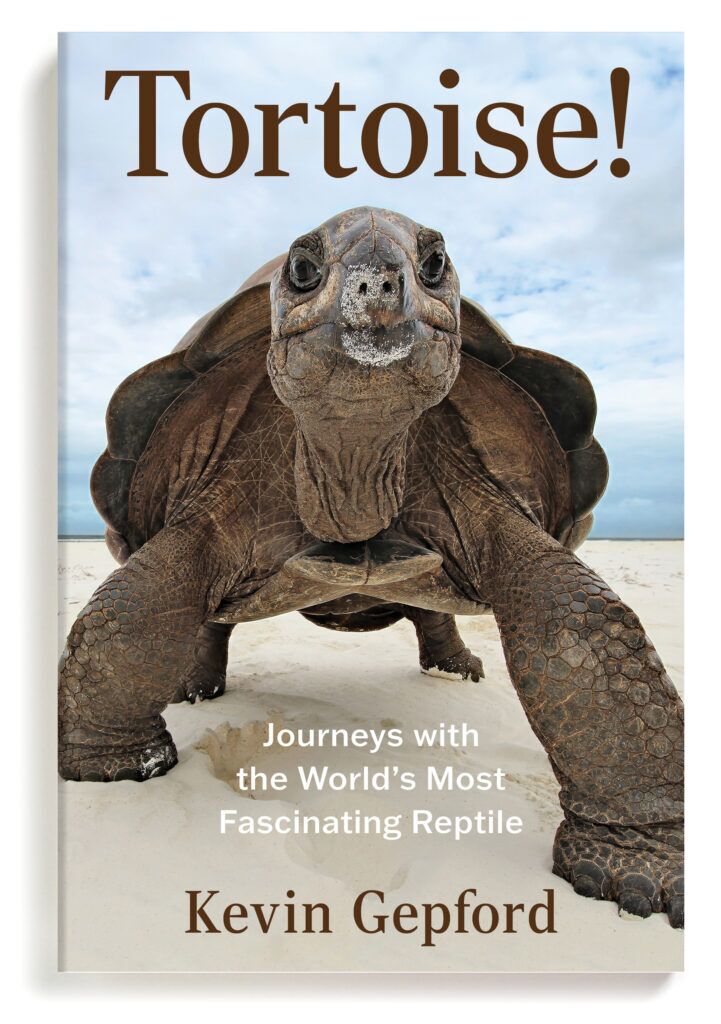
Four years in the making, The Tortoise Project is becoming a book. This project grew out of several years of field reporting and became a globe-spanning work of narrative nonfiction. It’s a story of exploration and adventure, deep time and vanished worlds, extinction and survival, and yes, the remarkable lives of tortoises.
Tortoise! is forthcoming from W. W. Norton & Company in July 2027.
The book explores the extraordinary natural history of tortoises and the people working on the front lines to save them — and what their survival can tell us about extinction, conservation, and our relationship with the natural world.
I sometimes describe tortoises as the world’s most fascinating reptile. But I could just as easily call them the world’s most wonderful reptile. Or even the most endearing. For better or worse, tortoises have captivated people for centuries. Because of humans, they have also become among the world’s most imperiled animals. Numerous tortoise species have already disappeared. The survivors all face global threats primarily from habitat loss and wildlife trafficking.
Tortoises are relative newcomers in the much older story of turtles. For more than 210 million years, turtles have reshaped life on our planet. They have lived on Earth long before humans made their appearance. They survived the asteroid 66 million years ago that ushered in the Cretaceous-Tertiary extinction, wiping out the dinosaurs along with three-quarters of the planet’s plant and animal species.
Then tortoises arose starting 56 million years ago, during the Eocene. They dispersed into a wide range of climates and habitats, from rainforests to some of the driest and harshest deserts, becoming burrowers and grazers, dwarfs and giants. About 50 species of tortoises survive today, living on every continent except Antarctica and on many oceanic islands.
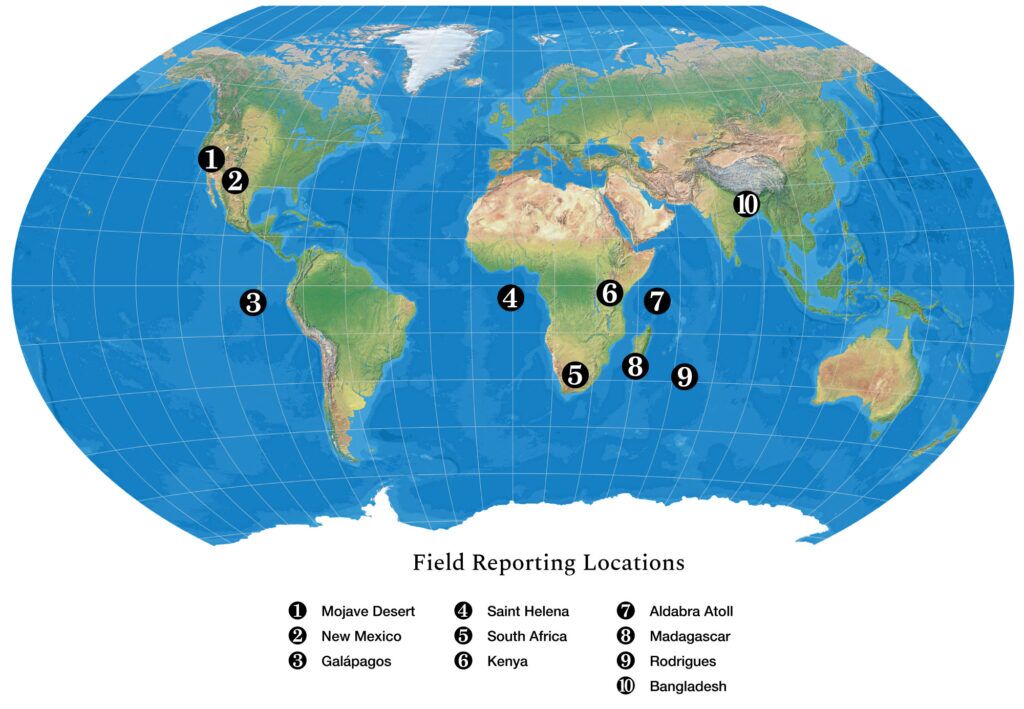
My field reporting over several years has taken me around the world — from the Galápagos Islands in the Pacific, to St. Helena in the Atlantic, and Aldabra Atoll in the western Indian Ocean; from Africa to Asia, Madagascar, and the Mojave Desert in the American Southwest.